
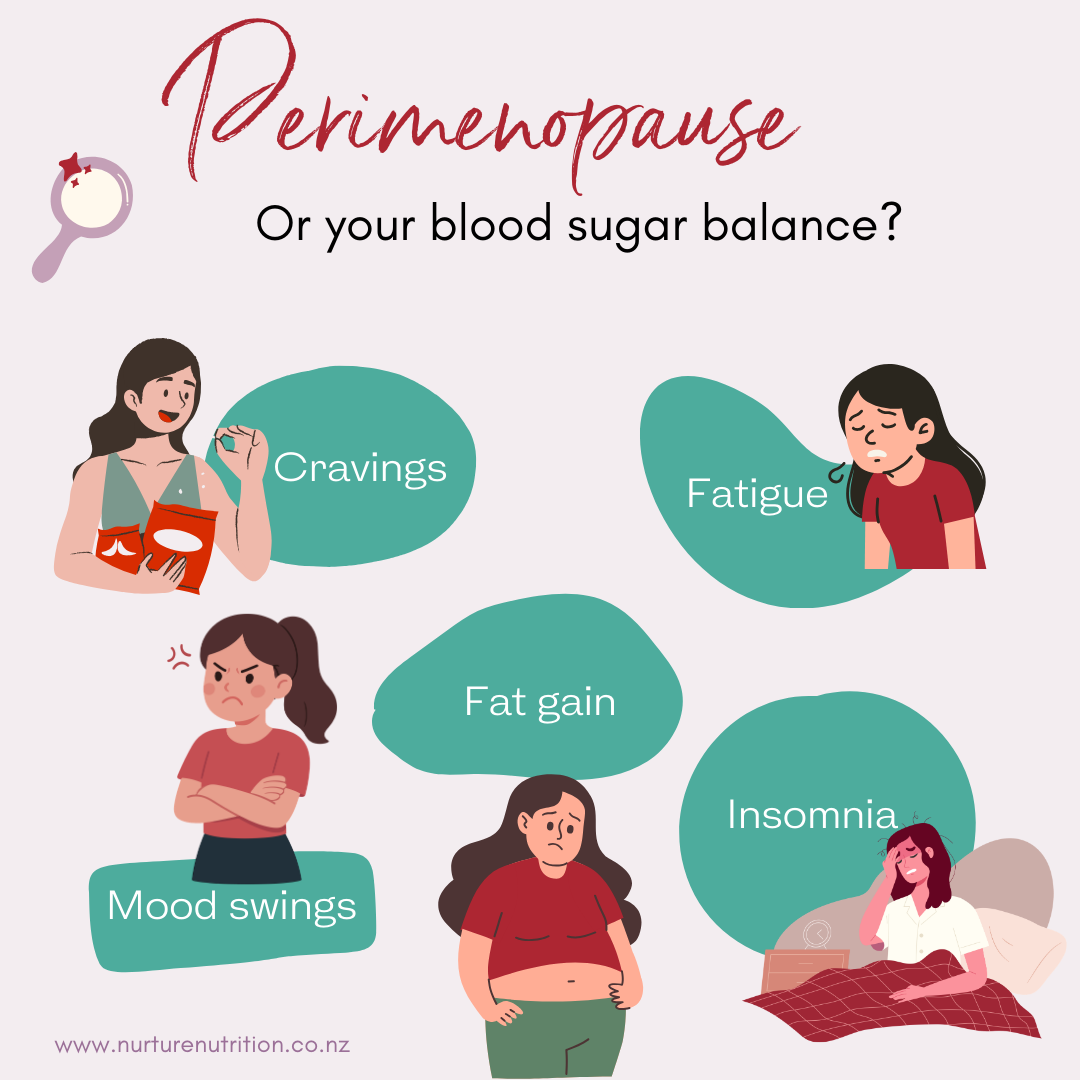
Many women entering perimenopause notice changes like:
- increased cravings
- fatigue
- mood swings
- stubborn weight gain
These symptoms are often blamed purely on hormones.
But in many cases, blood sugar stability plays a significant role in how these symptoms show up.
Blood sugar affects:
- energy production
- stress hormones
- appetite regulation
- fat storage
- mood stability
This is often the first place I start with clients, because when blood sugar improves, many symptoms begin to shift.
Why Blood Sugar Matters More in Perimenopause
During perimenopause, the brain and body become more sensitive to changes in glucose availability.
Oestrogen plays a role in how the brain uses glucose. As levels fluctuate:
- energy regulation becomes less stable
- stress responses can increase
- blood sugar dips can feel more intense
This is one reason symptoms like:
- anxiety
- fatigue
- cravings
- sleep disruption
Become more noticeable, even if you haven’t changed what you eat or any lifestyle factors. Let’s take a look at each symptom to help you better understand how blood sugar instability and metabolic shifts may be part of your root cause picture.
- Energy Crashes and Fatigue
When blood sugar rises quickly and then drops:
- energy spikes
- then crashes
- Common signs:
- mid-afternoon exhaustion
- needing coffee or sugar
- difficulty concentrating
2. Increased Cravings and Snacking
Blood sugar swings trigger hunger hormones.
Signs include:
- craving sweets or carbs
- feeling hungry soon after eating
- late night snacking
3. Mood Swings and Irritability
The brain relies on steady glucose.
When levels fluctuate:
- irritability increases
- mood becomes less stable
- Common experiences:
- feeling “hangry”
- snapping at people unexpectedly
- anxiety when meals are delayed
4. Weight Gain Around the Midsection
Frequent insulin spikes encourage the body to store fat.
Signs include:
- weight gain around the waist
- difficulty losing weight despite “eating well”
5. Poor Sleep
Blood sugar drops overnight can trigger a stress response.
Signs include:
- waking between 2–4am
- difficulty staying asleep
- waking feeling unrefreshed
What Actually Helps
The good news is that blood sugar stability is one of the most practical and effective areas to improve.
It often comes down to how meals are structured throughout the day.
Balanced meals that include adequate amounts of:
- protein
- fibre
- healthy fats
can help support:
- more stable energy
- fewer cravings
- improved mood
- better sleep
If you’re recognising these patterns, the next step is to start structuring your meals in a way that supports blood sugar stability.
I’ve created a simple guide to help you do exactly that.
Download the Balanced Meal Planner for Perimenopause here
Inside, I show you how to build balanced meals that will help you reduce cravings and snacking and support stable energy throughout the day

If you need personalised support and are ready to understand what your body actually needs, the next step is to book an initial consultation with me.
This is where we look at your symptoms, your patterns, and what’s driving them, and create a plan that works for your body.