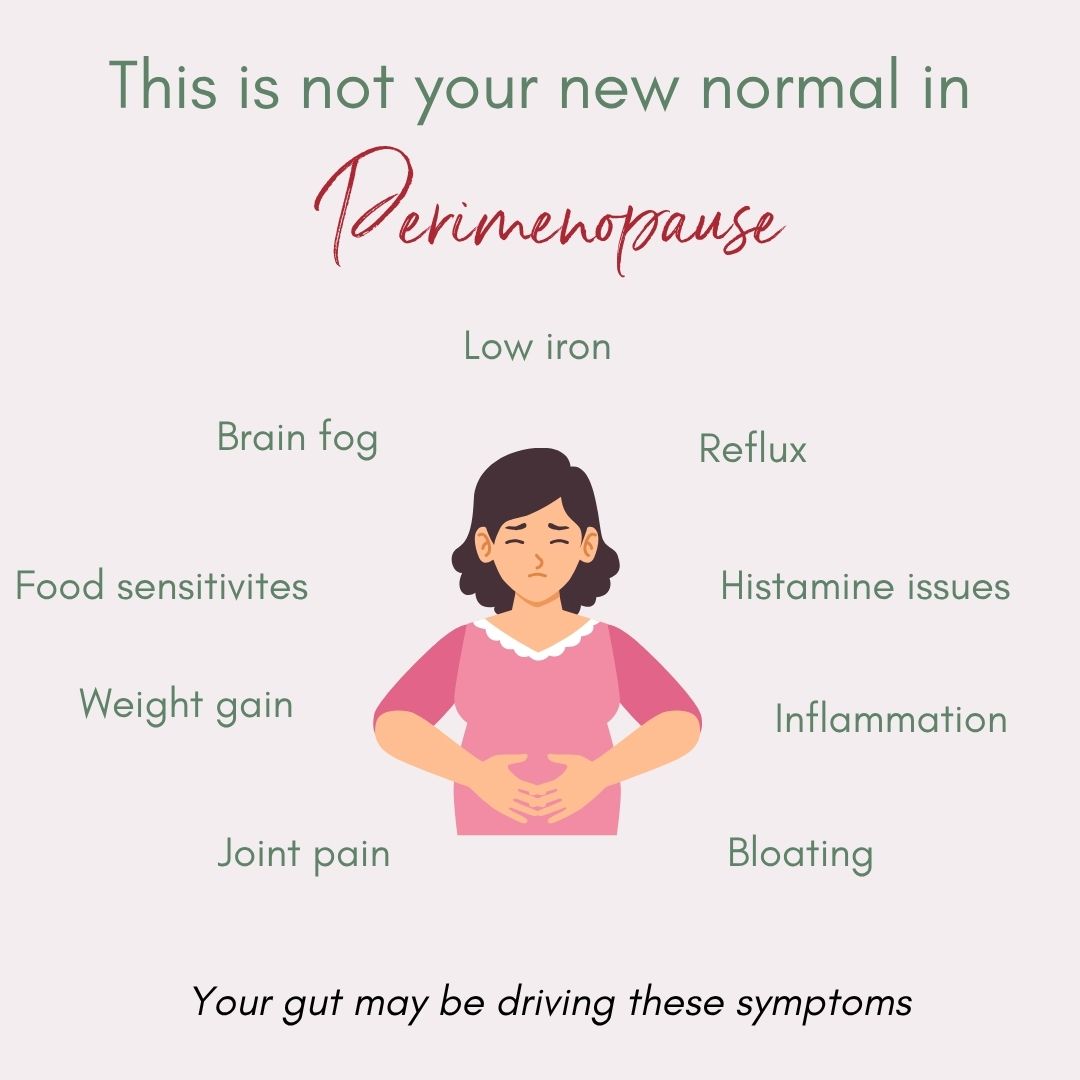
If you’re in your late 30s or 40s and suddenly dealing with:
• unexplained weight gain
• low energy
• PMS that feels worse than ever
• joint pain
• brain fog
• reflux, bloating, or “random” food reactions
And you’ve decided or been told this is just aging or perimenopause,
I want you to hear this clearly:
No, this is not something you just have to put up with.
Your hormones are shifting, yes.
But when your symptoms feel excessive, persistent, or don’t respond to the “usual advice”, there is almost always something deeper going on.
And more often than not, it comes back to the gut. In fact, almost everything else is downstream from the gut and if you have any gut symptoms alongside your ‘perimenopause’ symptoms, it’s time to look a little deeper.
The Missing Link: Gut, Immune System, and Metabolism
Around 80% of your immune system sits just beneath your gut lining.
That means your gut isn’t just about digestion, it’s constantly communicating with:
• your immune system
• your liver
• your thyroid
• your brain
• your metabolism
When your gut is functioning well, everything downstream works better.
When it’s not? You can see symptoms widespread throughout the body. We call this systemic, and much of what we refer to as systemic, chronic inflammation has a root cause in the digestive system.
This is exactly why I take a root-cause approach and use complete healing systems like the G.E.M.M (Gut Ecology & Metabolic Maintenance) protocol, because when we improve gut function at a cellular level, we start to shift inflammation, hormone balance, and metabolism together, not in isolation.
Much of what is put down to normal aging or perimenopause is driven or worsened by poor digestive function.
5 Hidden Gut Issues That Can Drive Weight Gain and Symptoms in Perimenopause
1. Low Stomach Acid (One of the Most Overlooked Issues I See)
This is a big one, and it’s often missed because women are told they have too much stomach acid if they have reflux, but in many cases? It’s actually not enough stomach acid
Why this matters:
Stomach acid is essential for:
• breaking down protein
• absorbing minerals (especially iron, zinc, magnesium)
• protecting against bacterial overgrowth
Symptoms can include:
• reflux
• bloating after meals
• fatigue
• low iron
• brittle nails
You can still experience this with normal iron levels, this was the case for me, however the vicious cycle I see all the time:
Long term low protein intake → low stomach acid
Low stomach acid → poor iron absorption
Low iron → fatigue + heavy bleeding
Heavy bleeding → more iron loss
And around we go. This is incredibly common in midlife women and your hormones interplay here too as estrogen stimulates histamine which can cause heavy bleeding but histamine can also can directly effect stomach acid levels.
Low stomach acid can also lead to small intestinal bacterial overgrowth (SIBO) so it is really important to get on top of this.
2. Leaky Gut (Increased Intestinal Permeability)
Your gut lining is supposed to act like a barrier.
It lets nutrients through and keeps everything else out.
When that barrier becomes compromised?
Your immune system gets activated.
Think its rare? Think again, this lining is only one cell thick.
What that can lead to:
• inflammation
• food sensitivities
• autoimmune triggers
• thyroid dysfunction
This is personal for me.
The key to healing my thyroid, my brain fog, my energy, and even my allergies, came back to my gut. This is the root of much autoimmune disease.
And as a woman with lipoedema, this piece matters even more.
There’s growing awareness that gut permeability and inflammation are higher in women with lipoedema, which can further impact our lymphatic system, metabolism and symptoms.
3. Gut Dysbiosis → Systemic Inflammation
Your gut is home to trillions of bacteria.
When that balance is off?
It can drive inflammation throughout the body, especially when combined with leaky gut as above.
Mechanisms:
• endotoxins like LPS (Lipopolysaccharides)
• inflammatory cytokines
• immune activation
Symptoms:
• fatigue
• joint pain
• weight resistance
• brain fog
This is where women often feel like:
“I’m doing everything right, but nothing is working.”
Because it’s not just about food intake, it’s about how your body is responding internally.
4. Poor Oestrogen Detox (The Estrobolome)
Your gut microbiome plays a key role in how you process oestrogen.
This is called the estrobolome.
When this isn’t working well:
An enzyme called beta-glucuronidase can cause oestrogen to be recycled instead of eliminated.
This can contribute to:
• heavy periods
• PMS
• breast tenderness
• fluid retention
This is often happening in early perimenopause when our estrogen can fluctuate to levels twice what we had in our 20’s and early 30’s. Again this links back to inflammation, gut health, and liver function.
5. Nutrient Malabsorption (The Piece So Many Women Miss)
You are what you eat? Maybe that should be – ‘You are what you absorb’. You can be eating well and taking the best quality supplements money can buy…
But if your gut isn’t functioning properly, you’re not getting all of that bang from your buck.
Key nutrients impacted:
• iron
• zinc
• magnesium
• B vitamins
• selenium
Symptoms:
• fatigue
• anxiety
• poor stress resilience
• thyroid dysfunction
• low energy
And this is where I see women saying: “I’ve had low iron for decades.”
And I’ll be honest, that’s not normal. It’s common. But it’s not normal and it’s usually a sign that something downstream hasn’t been addressed properly.
So What Do You Actually Do About It?
This is where most women get overwhelmed.
Because they’ve tried:
• cutting foods
• adding supplements
• following rigid plans
…and it hasn’t worked.
My approach is different.
It’s not about restriction, killing anything off or huge amounts of input.
It’s about restoring function.
Start here:
1. Prioritise protein at meals
Even working toward 25–30g per meal can:
• support stomach acid production
• stabilise blood sugar
• improve energy
(You can download my balanced meal planner here to help with this, it’s a simple place to start.)
2. Increase non-starchy vegetables
These support:
• gut lining
• liver detox
• microbiome diversity
You may need to focus on well cooked vegetables initially
3. Focus on nutrient density
Especially:
• zinc (critical for stomach acid)
• B12
• magnesium
High quality protein from animal sources and whole foods.
4. Get honest with your symptoms
It is not normal to:
• react to multiple foods
• feel constantly bloated
• rely on reflux medication long-term
• be chronically constipated or irregular
Even if you’ve been told it is.
Where G.E.M.M Fits In
This is exactly why I use a structured approach like G.E.M.M in my practice.
It’s not about:
• killing off bacteria
• extreme elimination diets
• random protocols
Or taking loads of different supplements
It’s about:
• restoring gut lining integrity
• supporting cellular function
• allowing your body to rebalance itself
In a way that’s sustainable and realistic for your life. If you’re curious about GEMM you can find out more here
Final Thoughts
If you’re navigating perimenopause and feeling like your body is working against you, I want you to take this away:
- This is not your new normal.
- Everything is downstream from the gut.
When we address the root causes, not just the symptoms, things can shift.
- Energy improves.
- Digestion improves.
- Hormones become easier to work with.
- And weight loss starts to feel possible again.
Ready to Work on This Properly?
If you’re tired of trying different things and want a structured, personalised approach, you can work with me 1:1 and we can uncover what’s driving your symptoms and create a plan that actually works for your body. Find out more and get started here