The Hidden Role of the Immune System in Perimenopause Symptoms
Most women are told their symptoms are “just hormones.” But what if your immune system is part of the picture?
What My Early Perimenopause Journey Taught Me
Looking back, immune dysfunction was actually one of my first signs of perimenopause.
In my late 30s, after a particularly stressful year, my body hit the wall.
That year started with my youngest starting school and my business being born, and ended with my marriage being over.
Not long after, I developed shingles. Something most people associate with much older adults. I also experienced chronic tmj pain, hives, histamine intolerance, and for the first time in about a decade, an aggressive UTI.
Later, I went on to develop Bell’s palsy.
At the time, I didn’t connect any of this to perimenopause nor did my GP. But in hindsight, it makes a lot more sense.
As my hormones began to fluctuate wildly, my body’s ability to regulate stress and immune responses had shifted. And that combination of high stress and early perimenopause plus some underlying latent viruses created the perfect storm.
Perimenopause Doesn’t Create Immune Problems
I want to be really clear about this. Perimenopause doesn’t create immune dysfunction.
It doesn’t mean your body is suddenly “broken” and you will get sick.
But it can reveal when your system has been under pressure for a while.
Why the Immune System Can Become More Reactive During perimenopause:
• Hormones fluctuate
• Stress tolerance changes
• Immune signalling can shift
As I always say perimenopause is not a diagnosis or a disorder but a destabilising period like puberty and pregnancy.
Oestrogen plays an important role in regulating the immune system. As levels skyrocket unopposed by progesterone in early perimeopause and then decline later, this regulation becomes less stable.
This can:
• Lower your threshold for inflammation
• Increase mast cell activity (which affects histamine)
• Make the body more reactive overall
So while perimenopause isn’t the root cause, it can act as a trigger point.
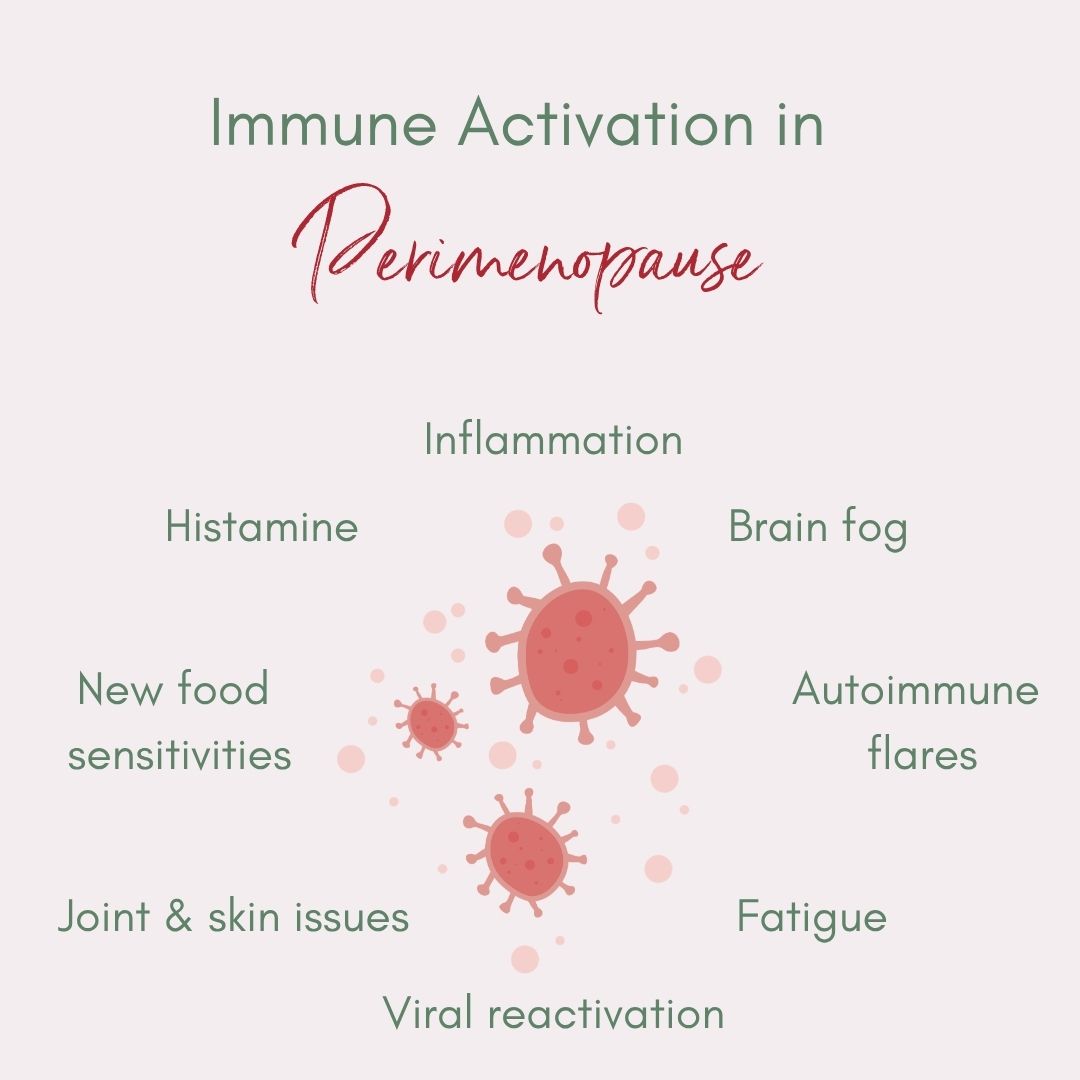
Common Signs of Immune Activation in Perimenopause
This is where symptoms can start to show up in ways that don’t always get linked back.
You might notice:
- Increased inflammation
- Joint pain
- Skin issues or rashes
- Histamine sensitivity or new food reactions
- Brain fog and fatigue
- Autoimmune flares
- Viral reactivation (such as shingles or EBV)
- Recurrent infections
These symptoms are often brushed off or treated in isolation.
But they are rarely random.
What This Is Often Linked To
When I see this in clinic, I’m looking at the bigger picture.
Common drivers can include:
- Gut health and immune balance
- Liver load
- Nutrient deficiencies
- Chronic stress load
- Blood sugar dysregulation
These systems all interact.
Which is why addressing one piece in isolation often doesn’t fully resolve things.
When It’s Worth Looking Deeper
If you’ve noticed:
• A sudden increase in sensitivity to foods or environments
• Ongoing inflammation or pain
• Recurring infections or viral flare-ups
• Symptoms that don’t quite fit into one clear box
It’s worth looking beyond hormones alone.
Where to Start
There are always foundational things you can support:
• Nourishment and protein intake (grab my free balanced meal planner on the side bar)
• Addressing common nutrient deficiencies in perimenopause
• Stress and recovery
• Gut health
But the most important step is understanding what is actually driving your symptoms.
Because the approach will differ depending on whether this is being driven by gut dysfunction, immune activation, stress, or something else.
Getting Clear Answers
This is something I assess properly in clinic.
When immune activation or underlying drivers are suspected, we look at the body as a whole, not just one system in isolation.
From there, we can create a targeted plan based on what your body actually needs.
Final Thoughts
If your symptoms have changed, escalated, or started to feel more complex, it’s worth paying attention.
Perimenopause may be the time that whatever is floating under the surface shows up.
But symptoms are rarely the full story.
If this is resonating, this is something I can help you with. Click here to learn more about how we can work together