Perimenopause isn’t just about declining hormones
If you’re in your 40s (or heading there), it’s easy to assume that every new symptom is “just hormones.”
But in my experience, hormones are often responding to what’s happening elsewhere in the body, and one of the biggest players is your liver.
Your liver isn’t just a detox organ.
It plays a key role in:
• processing and clearing hormones (like oestrogen)
• supporting digestion through bile production
• managing histamine and inflammation
• regulating energy and metabolic function
So when your liver is under pressure, it can show up in ways that looks purely hormonal, but isn’t just about hormone levels or balance.
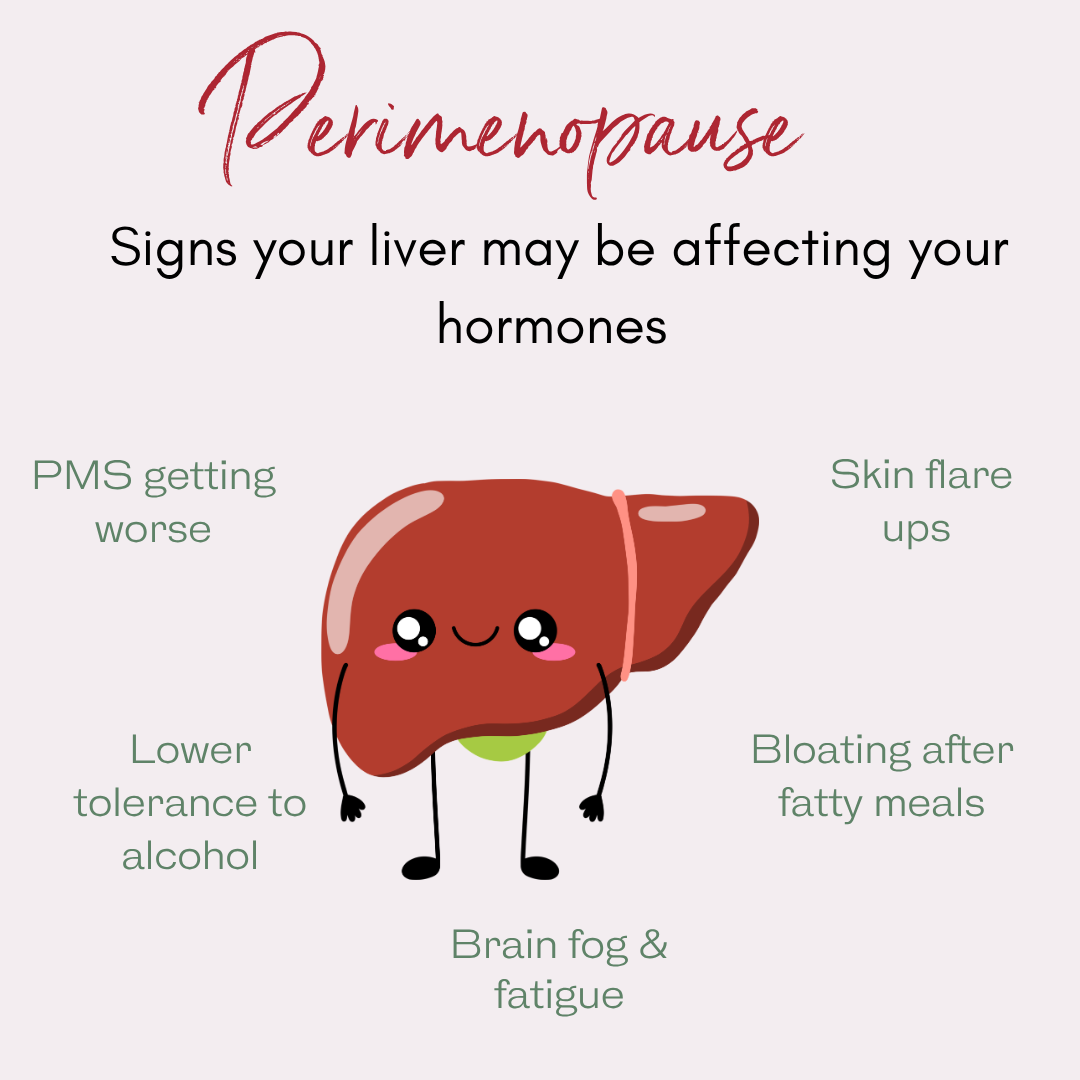
Here are 5 common signs I see in clinic 👇
PMS, Heavy Periods or Hormonal Symptoms Getting Worse
This is one of the most common symptoms I see in women in early perimenopause. They notice their cycles becoming heavier or symptoms intensifying.
This can be linked to fluctuating hormone levels for sure especially as oestrogen rises sharply than crashes. But it can made a lot worse by how well your body is clearing hormones.
Your liver helps process oestrogen so it can be safely removed from the body.
If that process slows down, the oestrogen in a more volatile form than originally may be recirculated. You may notice:
- heavier bleeding
- breast tenderness
- fluid retention
- worsening PMS
It’s not always about just your hormone levels, sometimes it’s about how well your body is handling the fluctuations.
You Feel Sluggish, Bloated or Off After Fatty Meals
This is where digestion and liver health overlap. We often forget that our liver is indeed a digestive organ too.
Your liver produces bile, which helps break down fats and absorb nutrients.
If bile flow is sluggish, you might notice:
- bloating after meals
- nausea with rich foods
- constipation
- a general “heavy” feeling after eating
I often see this alongside gut symptoms, which can create a bit of a vicious cycle – poor digestion places more pressure on the liver, and vice versa. If you’ve had your gall bladder removed, you liver has to take over that role too so is under extra pressure.
You’re More Sensitive to Alcohol, Foods or Chemicals
If you’ve noticed you don’t tolerate alcohol the way you used to, or you’re reacting more to certain foods, fragrances or environments, your liver load may need attention.
My hangxiety (next day alcohol induced anxiety) once after 2 glassess of wine in early perimenopause was quite frightening!
Your liver is responsible for processing:
- alcohol
- environmental toxins
- food compounds
- byproducts of metabolism
When that load builds up, symptoms can include:
- headaches after alcohol
- feeling “off” after certain foods
- sensitivity to perfumes or cleaning products
This can also overlap with histamine intolerance, something I see commonly in midlife women.
Skin Changes, Rashes or Breakouts
Your skin is your largest elimination organ and will often reflect what’s happening internally.
When the liver and detox pathways are under pressure, the body may need to use other routes (like the skin) to offload.
This can show up as:
• acne
• rashes
• itchiness
• dull or congested skin
This is something I’ve experienced myself, when my liver and detox pathways were under more strain, it showed up through my skin before anything else. Rashes, acne, hives and more.
Low Energy, Brain Fog or Afternoon Crashes
Your liver plays a role in energy regulation, blood sugar balance and overall metabolic function.
When it’s under pressure, you may notice:
• afternoon energy crashes
• brain fog
• poor resilience to stress
• feeling flat despite “doing all the right things”
This is often where women start to feel like something is off, even if their diet looks relatively “healthy.”
A Few Other Subtle Clues I Often See
Not everything shows up as a clear symptom, but these are patterns I look for in clinic:
• lack of hunger in the morning
• sugar cravings
• constipation or sluggish bowels
• overlap with gut issues
• signs of insulin resistance building over time
These don’t necessarily mean something is “wrong” but they can point to liver load.
It’s Not About “Doing a Detox”
When people hear “liver,” they often think detox teas or extreme cleanses.
That’s not what I recommend and I would prefer my clients are supported on a day to day basic, not just sporadically and aggressively.
In most cases, it’s about:
- supporting digestion and bile flow
- improving nutrient intake and protein (yes protein not juice cleanses!)
- reducing overall load on the system
- gently supporting the body’s natural detox pathways
This is where a personalised approach makes a big difference, especially in midlife, when multiple systems are interacting.
Final Thoughts
If you’re experiencing symptoms like these, it doesn’t mean your hormones are “broken.”
Often, it means your body needs support in the systems that help regulate and process those hormones.
When we support the liver, digestion and underlying drivers, symptoms often start to shift without needing to chase hormones directly.
Ready to Look at Your Root Causes?
If you’re feeling stuck, overwhelmed, or like you’ve been trying all the “right” things without results, this is exactly the work I do with clients.
We look at your symptoms, patterns, and lifestyle as a whole and create a plan that actually makes sense for your body.
👉 You can book a one-off consultation here or reach out if you have questions. I’m always happy to help you figure out your next step.