
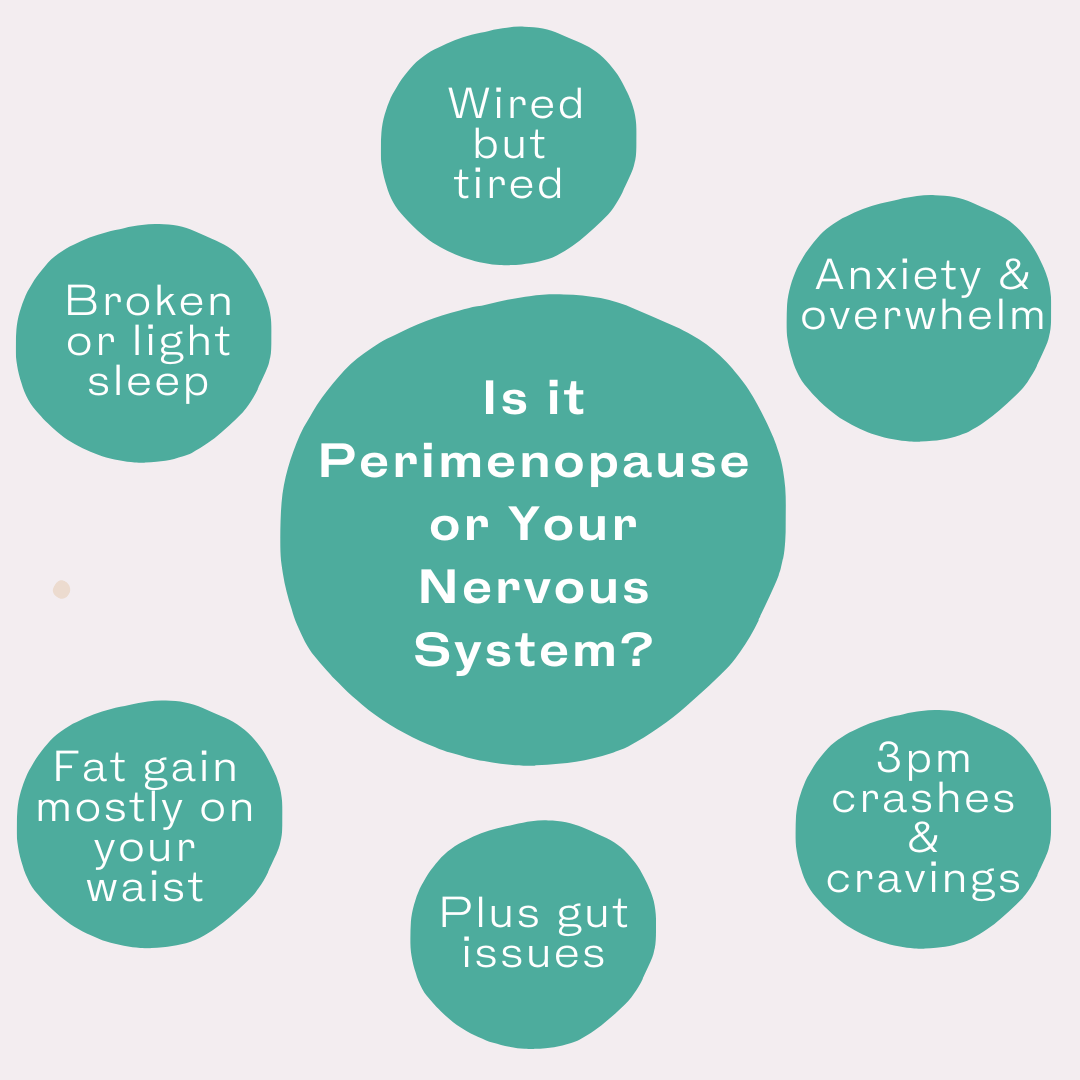
Many women experiencing perimenopause symptoms like fatigue, anxiety, poor sleep, and weight gain are told it’s “just hormones dropping.”
But in many cases, nervous system overload is a key driver behind how these symptoms show up. This is something I see often when working with women navigating midlife changes, and it’s often overlooked.
Your nervous system plays a central role in how your body responds to stress, regulates hormones, and maintains energy balance.
When it’s under constant pressure, the body shifts into a survival-focused state, and that can influence everything from sleep to digestion to metabolism.
Let’s break down what that can look like and what you can do to ease the load you are carrying.
- Feeling Wired but Tired
One of the most common signs of nervous system overload in perimenopause is feeling completely exhausted but unable to switch off.
This is often linked to changes in cortisol and adrenaline patterns.
Instead of rising and falling in a steady rhythm, stress hormones can become dysregulated, leaving you feeling “on edge” while also depleted.
You might notice:
- Racing thoughts at night
- Afternoon energy crashes
- Feeling tired but restless
- Difficulty relaxing, even when you have time
I see this pattern a lot – women pushing through the day, only to feel wide awake when they finally get into bed.
- Sleep Becoming More Fragile
Sleep often becomes lighter and more disrupted during perimenopause, and the nervous system plays a big role in this.
When the body is in a heightened state of alertness, it’s harder to enter and stay in deep, restorative sleep.
Common signs include:
- Waking between 2–4am
- Difficulty falling asleep
- Light or broken sleep
- Feeling unrefreshed in the morning
This isn’t just frustrating, it creates a cycle, because poor sleep further increases nervous system stress the next day and can contribute to cravings and poor food choices that lead to more symptoms.
3. Increased Anxiety or Emotional Sensitivity
You may notice that things that once felt manageable now feel overwhelming.
This can be linked to increased nervous system reactivity.
As progesterone begins to decline in perimenopause (which normally has a calming effect), the body can feel more sensitive to stress.
You might experience:
• Irritability
• Feeling easily overwhelmed
• Heightened anxiety
• Mood swings
Many of the women I work with describe this as feeling like their “tolerance has dropped” and it’s often one of their first perimenopausal symptoms.
4. Weight Loss Becoming Harder
This is where things can feel particularly frustrating.
If the nervous system is under constant load, stress hormones can influence metabolism in a way that makes fat loss more difficult. The body prioritises survival under stress, not weight loss.
This can show up as:
• Stubborn weight gain, especially around the middle
• Increased cravings (particularly for quick energy foods)
• Energy dips that make consistency harder
Your body will often resist weight loss if there is dysfunction in one or more systems, and chronic stress is a significant piece of that picture.
This isn’t about willpower – it’s about what your body is being signalled to do.
5. Digestive Changes Under Stress
The nervous system and digestive system are closely connected.
When the body is in a stress response, digestion is not a priority (and neither are your hormones).
Over time, this can lead to noticeable changes.
You might experience:
• Bloating
• Appetite changes
• Irregular digestion
• Feeling sensitive to foods you previously tolerated
This is something I often see alongside other symptoms, not in isolation, but as part of a bigger pattern.
Bringing It All Together
Hormones don’t operate in isolation.
The nervous system communicates constantly with the gut, liver, metabolism, and immune system.
When the body is under ongoing stress, it prioritises survival rather than optimal function.
That’s when symptoms start to layer:
• Sleep becomes disrupted
• Energy drops
• Mood shifts
• Weight becomes harder to manage
• Digestion becomes less resilient
This is why simply “treating hormones” isn’t often enough.
A Root Cause Approach
When I work with women in perimenopause, we’re not just looking at one symptom or one system. We’re looking at how everything is interacting, including the role of nervous system load.
Because when you address that load and support the body to recover properly, things often begin to shift:
• Energy becomes more stable
• Sleep improves
• Cravings reduce
• The body becomes more responsive again
If you’re experiencing these types of symptoms, it’s not random, and it’s not something you have to just push through. I’m a New Zealand based clinical nutritionist and I help women identify what’s driving their symptoms so they can come out the other side of perimenopause better than ever. You can learn more about working with me here: