
Gaining weight around your middle during perimenopause? Struggling with Sugar Cravings? Acne? PCOS? Fluid retention? It is very possible you are becoming or are already insulin resistant.
Insulin resistance is one of the most common — and overlooked — root causes I see in women during perimenopause and midlife. It’s also one of the most important to address if you want steady energy, balanced hormones, and an easier time maintaining a healthy weight.
Let’s dive into what insulin resistance is, why it happens, and most importantly — how you can start reversing it.
What is insulin resistance?
Insulin is a hormone made by your pancreas. Its main job is to move glucose (sugar) from your bloodstream into your cells, where it can be used for energy or stored for later.
With insulin resistance, your cells stop responding properly to insulin’s signal. Your body needs to make more and more insulin to get the job done. Over time, this can:
Lead to chronically high insulin levels (hyperinsulinaemia)
Drive weight gain, especially around the middle
Disrupt other hormones (including sex and thyroid hormones)
Increase inflammation and raise your risk of type 2 diabetes and cardiovascular disease
Insulin Resistance & Perimenopause
Why is insulin resistance more of an issue in Perimenopause?
Hormone shifts in midlife make your body more sensitive to blood sugar swings. Lower progesterone, fluctuating oestrogen, and changes in muscle mass can all reduce insulin sensitivity. Add in stress, busy schedules, disrupted sleep, and a lifetime of blood sugar ups and downs and insulin resistance can quietly creep in.
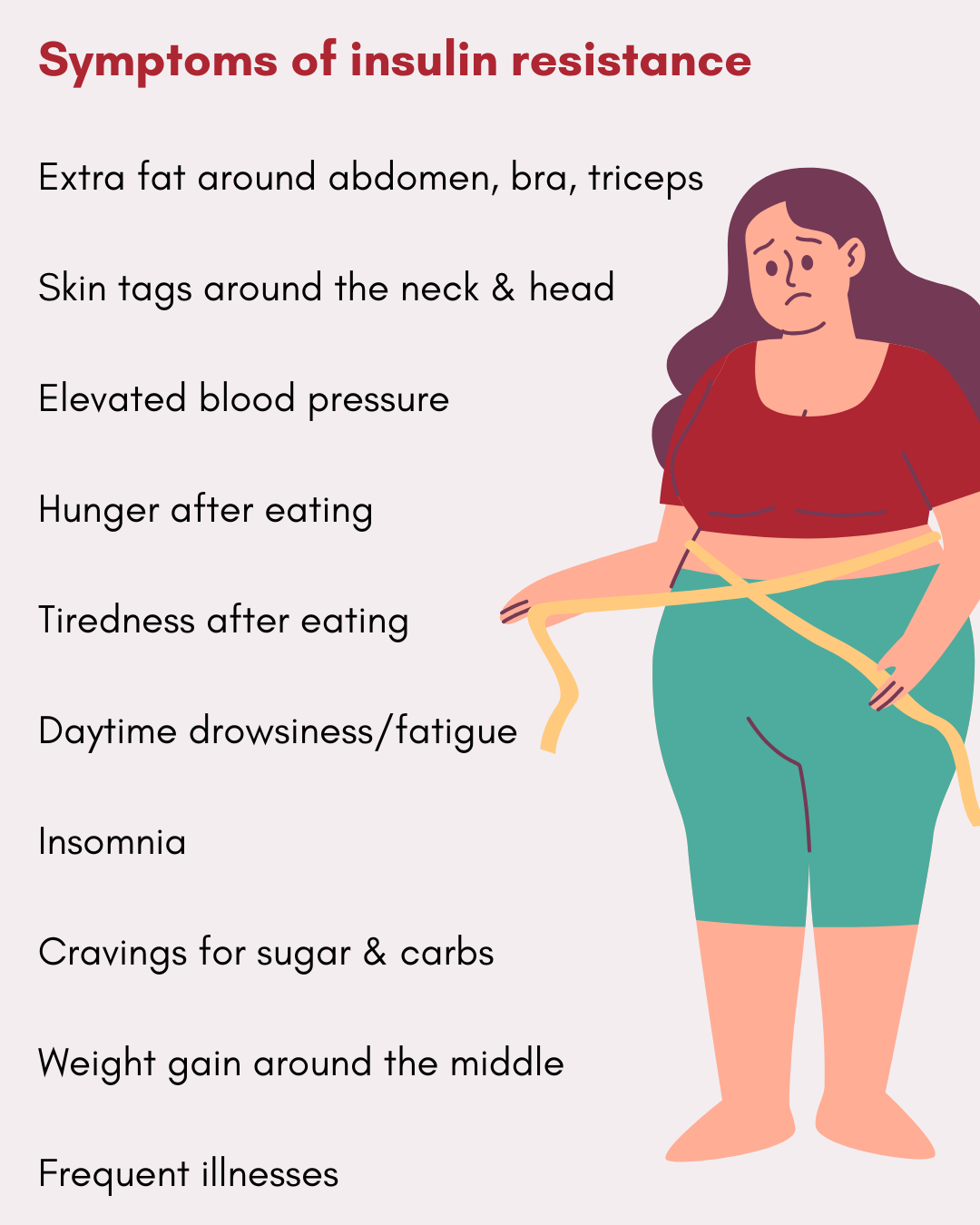
Signs to watch for include:
Fatigue or energy crashes
Strong carb or sugar cravings
Feeling “hangry” if you miss a meal
Difficulty losing weight despite eating well and moving
Brain fog or trouble concentrating
Skin tags, acne, or darkened patches of skin (often around the neck or underarms)
Why you want to fix it now:
Insulin resistance doesn’t just affect your waistline — it impacts your entire metabolic and hormonal health. Left unchecked, it can progress to pre-diabetes, type 2 diabetes, fatty liver disease, and increase your risk of heart disease, dementia, and certain cancers.
The good news? It’s reversible, often with simple but consistent changes to diet, lifestyle, and targeted nutrients.
How to Reverse Insulin Resistance
1. Build blood sugar-friendly meals
Include protein, healthy fats, and plenty of fibre at each meal
Limit refined carbs and sugars – swap white refined carbohydrates for whole food carbs like quinoa, sweet potato, or legumes
Don’t skip protein at breakfast, it sets up better blood sugar control for the day
2. Move your body daily
Strength training builds muscle, which makes your body more insulin-sensitive
Walking after meals helps your muscles soak up glucose more effectively
Mix strength with movement that you will enjoy and stick with
3. Prioritise sleep and stress management
Poor sleep can worsen insulin resistance in just one night
Stress hormones like cortisol raise blood sugar, calming your nervous system is just as important as changing your plate
4. Get strategic with meal timing
Avoid constant grazing, give your body time between meals to allow insulin to drop
Some people do well with a 12–14 hour overnight fast (always listen to your body and avoid extremes)
5. Support with key nutrients
Magnesium – improves insulin sensitivity
Omega-3s – reduce inflammation and support metabolic health
Vitamin D – low levels are linked to higher insulin resistance
Chromium – can help with blood sugar regulation
Quick Takeaways
Insulin resistance is common but reversible
Balancing your blood sugar benefits your hormones, energy, mood, and metabolism
Small, consistent changes add up faster than you think
Ready to Find Your Root Cause?
If you’re wondering whether insulin resistance could be part of your symptoms, or if something else is driving your fatigue, stubborn weight, or hormone imbalances, The Foundational Session is the perfect place to start.
This is a one-off, 90-minute deep-dive consultation where we’ll:
Review your full health history and symptoms
Identify likely root causes
Create a personalised plan you can start straight away
Discuss testing and supplements if needed (practitioner-only access)
Investment: $200 NZD
Book your Foundational Session →