Your body may already be depleted before perimenopause even begins
Most women don’t enter perimenopause with a “clean slate.” By the time symptoms like fatigue, mood swings, poor sleep or weight changes begin to show up, the body has often been under-resourced for years.
Not because you’ve done anything wrong, but because of what life tends to look like for many women.
The pill.
Pregnancy.
Stress.
Years of trying to “eat well” or follow different approaches.
It all adds up.
My Experience (and what I now see in my clients)
Looking back, I can see how nutrient deficiencies were a major predisposing factor in my health collapse.
In my teens and early twenties, my nutrition wasn’t particularly supportive. Like many women, I then went on the oral contraceptive pill, something we now know can deplete key nutrients like B vitamins, magnesium and zinc.
Pregnancy added another layer. I experienced severe vomiting/hyperemesis with my first, and went on to have four pregnancies with extended periods of breastfeeding. Add to that my youngest three children born close together with little recovery time between. While these are natural processes, they place a high nutritional demand, and in hindsight, I wasn’t fully replenishing what my body was using.
After my third child, my health really started to decline. I developed thyroid disease and a goitre large enough to compress my airway when lying down.
While this was a turning point as I ventured deep into health and nutrition, I also started experimenting with some pretty restrictive dietary approaches. While they were very well intentioned, I was eating in a far more restrictive way than necessary.
I healed my thyroid yet later came another wave of stress which coincided with early perimenopause and the cracks again began to show.
Why This Matters in Perimenopause
Perimenopause isn’t just about hormones fluctuating.
It’s also a time where the body becomes less tolerant of underlying imbalances. This is the time they are most likely to float up to the surface as our hormones are destabilised.
If nutrient levels are already low, symptoms will feel stronger, more frequent, and harder to manage.
This is why layering in sleep supplements, herbs, or even medications often doesn’t fully resolve things.
If the foundations aren’t there, the body will keep asking for support.
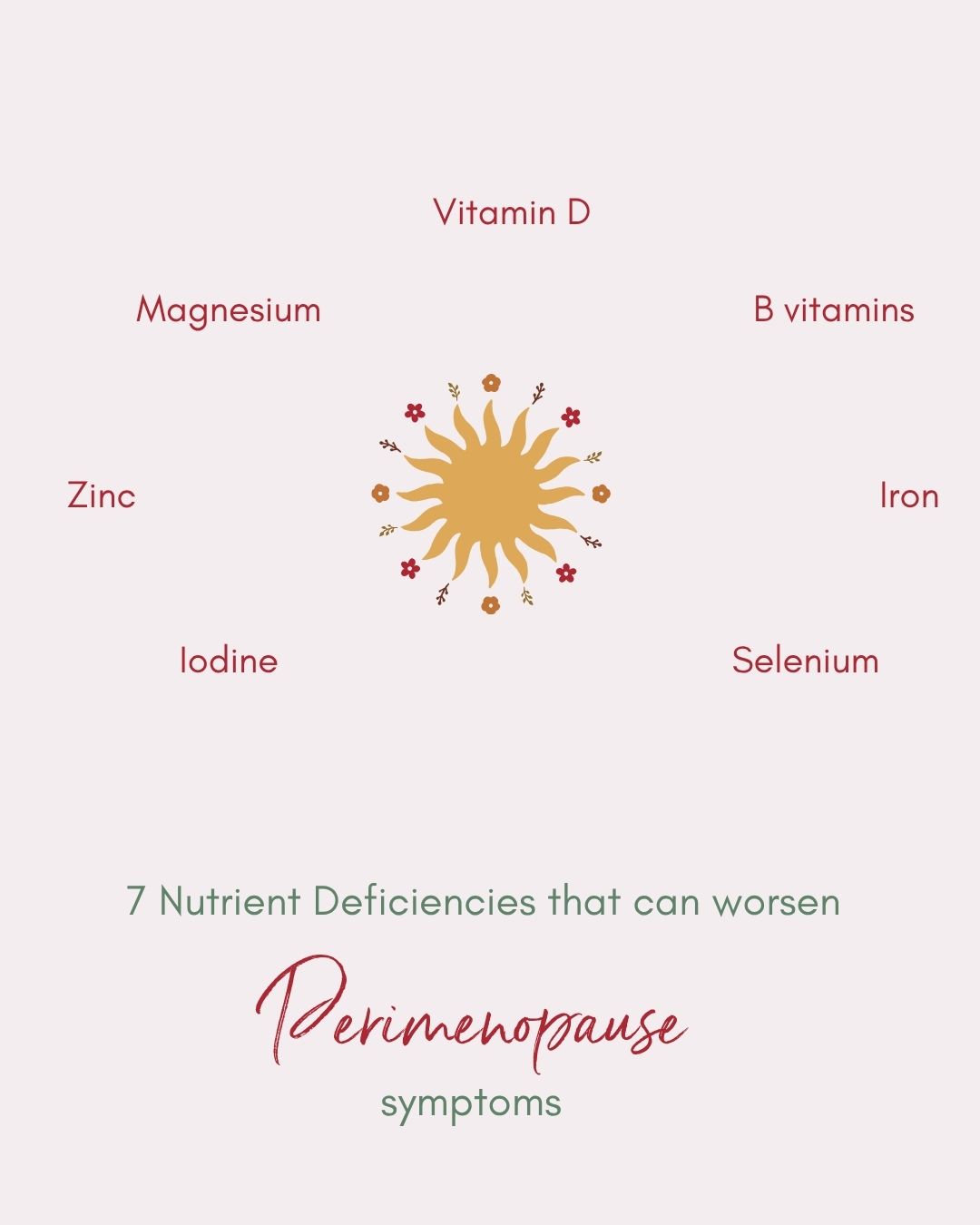
7 Nutrient Deficiencies That Can Worsen Symptoms
These are some of the most common nutrient gaps I see in practice, and how they can show up:
Magnesium
Supports the nervous system, sleep, and stress response.
Low levels may contribute to:
• Poor sleep
• Anxiety or feeling “wired but tired”
• Muscle tension
• Period pains and PMS
Iron
Essential for oxygen transport and energy production.
Low levels may contribute to:
- Fatigue
- Heavy menstrual bleeding
- Light headedness
- Reduced exercise tolerance
- Brain fog
B Vitamins (especially B6, B12, folate)
Support energy, mood, and hormone metabolism.
Low levels may contribute to:
- Fatigue
- Low mood
- PMS
- Poor stress resilience
Zinc
Important for immune function, hormone balance, and skin health.
Low levels may contribute to:
• Poor recovery
• PMS
• Skin issues
• Reduced resilience to stress
Iodine
Required for thyroid hormone production.
Low levels may contribute to:
• Sluggish metabolism
• Fatigue
• Thyroid dysfunction
Selenium
Works alongside iodine to support thyroid health and reduce inflammation.
Low levels may contribute to:
• Thyroid imbalance
• Ongoing fatigue
• Poor recovery
Vitamin D
Supports immune health, mood, and overall wellbeing.
Low levels may contribute to:
• Low mood
• Reduced immunity
• Fatigue
A Different Way to Look at Your Symptoms
If you’re experiencing symptoms like fatigue, mood changes, PMS, poor sleep or brain fog, it doesn’t mean your body is failing you. It may simply mean your body is under-supported. And this is where things can start to shift quite quickly once the right foundations are in place.
Why “Just Taking a Multivitamin” Isn’t Enough
This is something I see often. Many women are already taking supplements, sometimes more than I would recommend, yet still not feeling great.
That’s because:
• Doses are often too low for the nutrients they actually do need (most multi’s)
• Not all nutrients are included in meaningful amounts
• Individual needs vary significantly
In practice, I use a combination of:
• Symptom patterns
• Clinical experience
• Targeted testing (when needed) to determine what your body actually requires.
Where to From Here
If this resonates, the next step isn’t guessing or adding more random supplements.
It’s understanding what your body specifically needs.
This is exactly what I support women with in my 1:1 consultations and within my Root Cause Reset approach – Identifying the underlying drivers of your symptoms and creating a clear, personalised plan.
If you’re ready to feel more like yourself again, you can book a consultation or reach out to find out more.
You don’t need to push through or “just cope” with these symptoms.
With the right support, your body can feel very different.