Why the Symptoms Overlap and Why It’s Important to Get Clear Answers
If you’re wondering whether your symptoms are due to perimenopause or thyroid dysfunction, you’re not alone and the overlap is more common than most women realise.
It’s very common for women in midlife to be told their symptoms are ‘just perimenopause.’
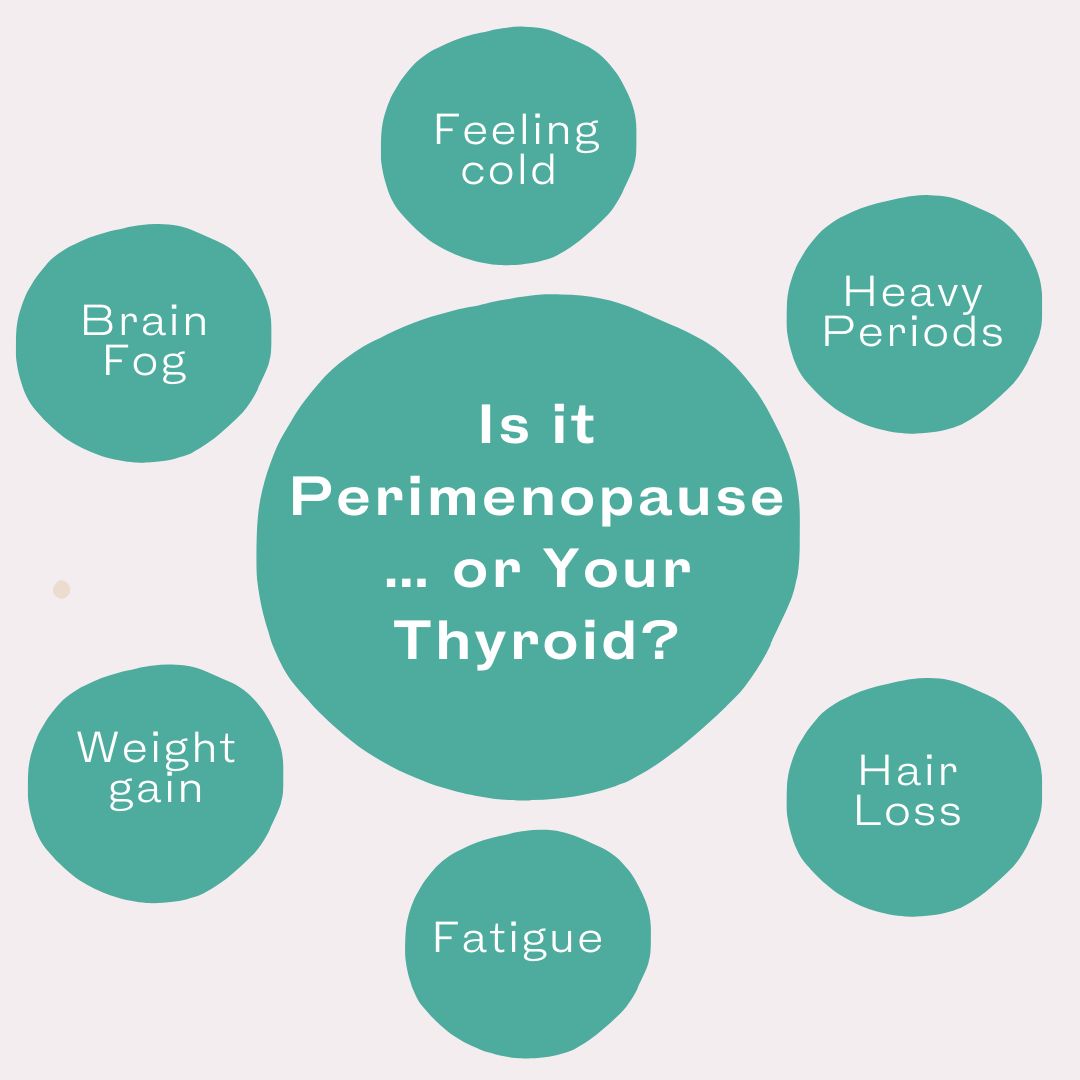
But in many cases, symptoms like fatigue, brain fog, and weight gain can also be linked to thyroid dysfunction.
Fatigue.
Brain fog.
Weight gain.
Low mood.
Poor tolerance to cold.
Hair thinning.
And yes, perimenopause can absolutely contribute to these.
But so can your thyroid and thyroid disease risk rises sharply between ages 35–55 for women.
Why Thyroid and Perimenopause Symptoms Overlap
Your thyroid plays a central role in metabolism, energy production, and how your body responds to stress. At the same time, perimenopause is a period of hormonal fluctuation, particularly with oestrogen and progesterone.
These systems don’t operate in isolation. They influence each other.
So, when something is off, symptoms can look very similar:
• Fatigue and low energy
• Brain fog and poor concentration
• Mood changes
• Weight gain or difficulty losing weight
• Feeling cold
• Changes in hair and skin
This is where things can get confusing, and why thyroid dysfunction is often overlooked.
My Experience
While my thyroid dysfunction happened in my early 30’s what I was experiencing was also brushed off as normal because I had young children.
Looking back, I can clearly see that what I was experiencing wasn’t just “normal” even though I heard that word a lot.
I was dealing with fatigue, brain fog, migraines, allergies and ongoing gut issues
My thyroid dysfunction wasn’t picked up through routine testing. Even when the weight of my thyroid gland was compressing my airway!
It was only identified when I was referred to an ENT specialist for chronic sinus issues, and he noticed a visible goitre in my neck and sent me for imaging. Even with all of that, because my TSH was ‘normal’ I walked out of there with an asymptomatic thyroiditis diagnosis.
That was the turning point.
I knew I needed a different approach rather than wait for it to get worse to medicate, however part of me assumed I would need thyroid hormones to manage it long-term.
So my compromise was seeing an integrative doctor who ended up treating me solely with nutrition.
That changed everything for me.
Does Thyroid Function Decline With Age?
You may have heard the term “thyropause,” which suggests that thyroid function naturally slows as we get older.
There is some truth to this.
But what I see more often in practice is not just age-related slowing, but a combination of:
- Long-term stress
- Nutrient depletion
- Gut dysfunction
- Hormonal shifts
- Inflammation
By the time women reach perimenopause, these factors have often been building for years and they are either driving or worsening thyroid function.
Why Thyroid Issues Are Often Missed
In New Zealand, standard thyroid testing is quite limited.
In many cases, only TSH is tested, and sometimes Free T4 if you’re lucky.
This means we’re often missing key pieces of the picture, such as:
• Free T3 (the active hormone)
• Reverse T3 (which can block thyroid function)
• Thyroid antibodies (which are the main cause of thyroid disease)
On top of that, reference ranges are often quite broad and based on population averages, and the populations used are those who get thyroid testing so often those presenting with the same symptoms as us.
It’s also important to say this isn’t necessarily the doctor’s fault. There are funding limitations and lab constraints that influence what can be tested. Many women are told their thyroid is “normal” when they still feel far from it.
What’s Driving Thyroid Dysfunction?
When I look at thyroid health in clinic, I’m not just looking at TSH.
I’m looking at what might be influencing thyroid function in the first place.
This can include:
• Gut health and immune activity (including antibodies)
• Chronic stress and cortisol patterns
• Nutrient deficiencies (such as iodine, selenium, iron and zinc)
• Oestrogen fluctuations
• Inflammation
This is why two women with “thyroid issues” may need completely different approaches.
Why Guessing Can Backfire
This is also where self-treatment can become problematic.
For example, I’ve had a client who ended up in hospital for a week after taking high doses of iodine that had been recommended to her.
Iodine can be helpful in some cases, but in others it can make things worse.
It depends on what is happening in YOUR body.
This is why it’s important to get clear answers before jumping into treatment. I always say I only test if it will change treatment and when that comes to the thyroid that is every time.
Where to Start
If you’re experiencing symptoms like fatigue, brain fog, weight changes or mood shifts, it’s important to explore whether your thyroid could be part of the picture.
If you want to start to feel better some simple starting points include:
• Ensuring adequate protein and overall nourishment not restriction
• Supporting mineral intake
• Looking at stress load and recovery
• Paying attention to gut health
But beyond that, the most important step is understanding if it is your thyroid and where in the feedback loop things are going wrong as each cause is treated differently.
Getting Clear Answers
If you’re unsure where to next, his is something I assess properly in clinic.
Where thyroid dysfunction is suspected, I offer a more comprehensive thyroid blood test panel than what is typically available through standard GP. All done through your local lab which I am also to help you navigate better with your GP referral too.
I will interpret your results from a functional perspective. This allows us to look at the full picture, including hormone conversion, antibody activity, and underlying patterns and make sure you are in optimal ranges, not minimum.
From there, we can create a targeted plan based on what your body needs, rather than guessing. You can get started by booking here.
Final Thoughts
If you’ve been told it’s “Just perimenopause” but something still doesn’t feel right, it’s important to look a little deeper.
These symptoms are not random.
And they’re not something you just have to push through.
If this is resonating, this is something I can help you explore properly.
Getting clear answers can make a significant difference, not just in how you feel day to day, but in how your body responds long-term.