Perimenopause Isn’t Just Hormones: What’s Really Driving Your Symptoms
If you’re in your late 30s or 40s and struggling with fatigue, poor sleep, mood swings, gut changes, worsening pms or weight gain, you might have been told it’s “just perimenopause.”
The list of symptoms I see attributed to perimenopause is growing by the day!
And yes, hormones are changing.
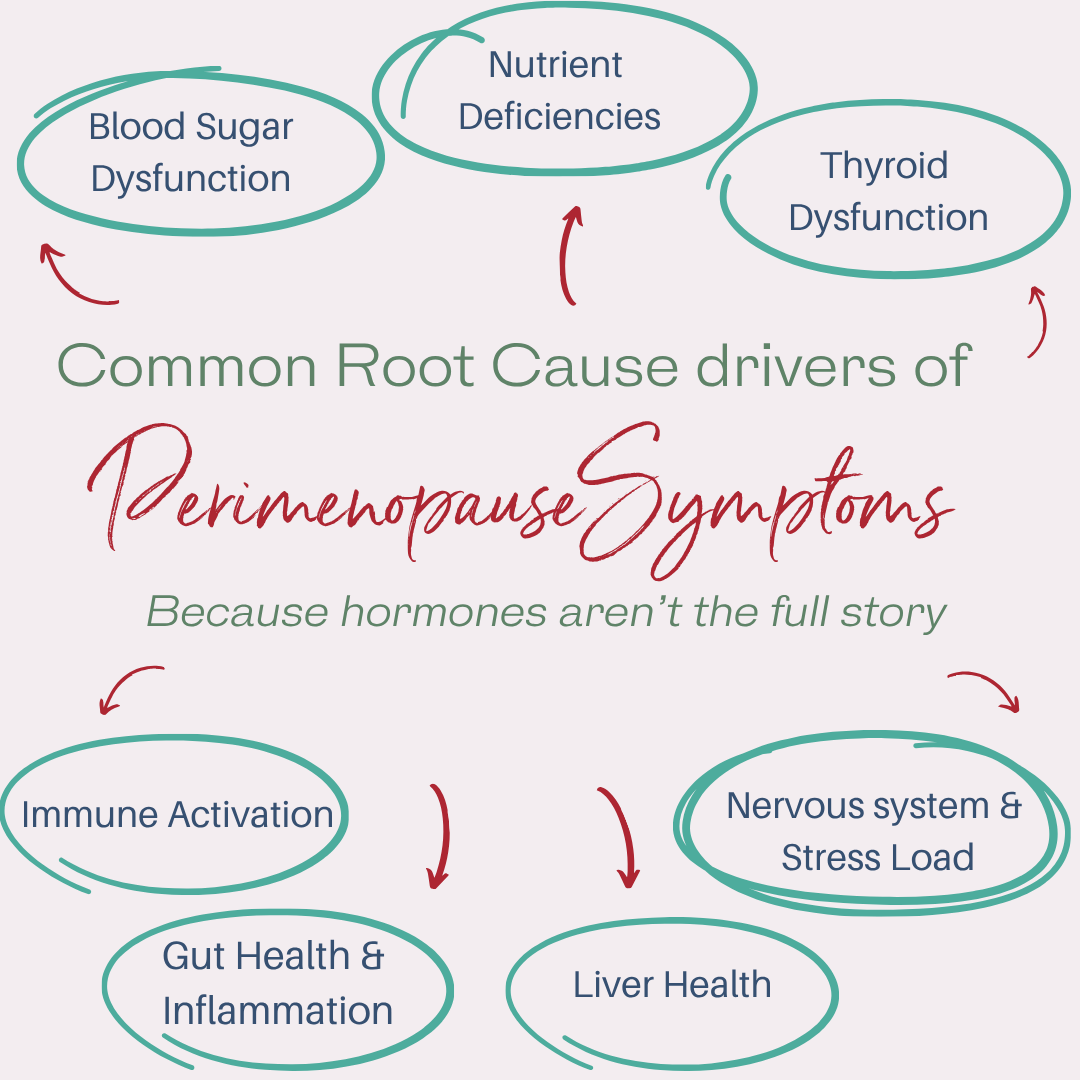
But in many cases, many so called perimenopause symptoms are being driven by underlying issues like blood sugar imbalance, nutrient deficiencies, gut health, or stress load – not hormones alone.
This is where a lot of women get stuck.
Because when everything is blamed on hormones alone, the real drivers of symptoms are often missed.
What Is Actually Happening in Perimenopause?
During perimenopause, your hormones don’t simply decline, they fluctuate.
Oestrogen rises and falls wildly, while progesterone gradually declines.
This is destabilising and your body becomes more sensitive to stress and underlying imbalances.
This is why symptoms don’t come from hormones alone.
They come from how your body is coping with these changes.
Anything lying beneath the surface will float up now for your attention.
The Missing Piece In Perimenopause
Perimenopause doesn’t usually create problems out of nowhere.
It reveals them.
By the time symptoms begin, your body has often been under pressure for years from things like:
• stress
• nutrient depletion
• gut dysfunction
• blood sugar instability
• immune load
As hormones fluctuate, your body becomes less tolerant of these underlying imbalances, and symptoms become more noticeable. This also happens in other times of massive hormonal shift like puberty, pregnancy & postpartum.
Why Perimenopause Symptoms Can Feel So Confusing
One of the biggest challenges in perimenopause is that the same symptom can have multiple causes.
Waking between 2–4am
Common drivers include:
• blood sugar drops overnight
• nervous system patterns
• cortisol changes
• liver load
Low iron that keeps coming back
This isn’t always about intake.
It may involve:
• digestion
• stomach acid
• gut health
• nutrient absorption
Feeling more reactive or sensitive
This can be influenced by:
• immune system activation
• histamine
• gut health
• overall system load
Ongoing fatigue or brain fog
Often not just one thing, but a combination of:
• nutrient status
• thyroid function
• stress load
• inflammation
This is why following generic advice or trying random supplements often doesn’t fully resolve things.
Because your body isn’t random.
👉 It’s responding to patterns.
The Body Systems That Actually Influence Your Hormones In Perimenopause
Blood Sugar And Metabolism
Blood sugar stability affects energy, cravings, mood, and fat storage, and is one of the most common drivers of weight gain in perimenopause.
👉 [Read more about blood sugar and perimenopause here]
Nutrient Status
Low levels of key nutrients like magnesium, iron, zinc, and B vitamins can worsen fatigue, mood changes, and stress tolerance.
👉 [Read more about nutrient deficiencies here]
Thyroid Function
Thyroid issues are often overlooked but can mimic or amplify perimenopause symptoms.
👉 [Read more about thyroid and perimenopause here]
Gut Health And Inflammation
Your gut influences digestion, immune function, hormone processing, and nutrient absorption.
👉 [Read more about gut health and perimenopause here]
Immune System And Histamine
Increased sensitivity, inflammation, or recurring symptoms can point to immune system involvement.
👉 [Read more about the immune system in perimenopause here]
Liver Function And Hormone Clearance
Your liver plays a key role in processing hormones and supporting overall metabolic health.
Nervous System Load
Chronic stress affects sleep, energy, digestion, and how your body regulates hormones.
👉 [Read more about nervous system support here]
Why “Doing All the Right Things” Doesn’t Always Work
This is something I hear all the time:
“I feel like I’m doing everything right… but nothing is changing.”
And it makes sense.
Because when you’re trying to support multiple systems at once, without knowing what’s most relevant for your body, it becomes:
• overwhelming
• inconsistent
• and often ineffective
It’s not about doing more.
👉 It’s about knowing where to focus.
A Different Approach to Perimenopause Support
Instead of guessing, restricting, or layering more supplements…
A root cause approach looks at:
• your symptoms
• your history
• your patterns
• and how your body is responding overall
From there, we can identify what’s actually driving your symptoms and create a plan that makes sense for you.
Ready To Stop Guessing?
If you’re feeling like your symptoms don’t quite add up, or you’ve been trying different approaches without real progress…
There’s usually a reason.
And it’s often something that hasn’t been properly identified yet.
👉 In my 1:1 work, I help you identify what’s actually driving your symptoms and create a plan that works with your body, not against it.
Common Questions About Perimenopause Symptoms
Why do perimenopause symptoms seem so widespread and random?
Because multiple systems are involved, symptoms can change depending on what your body is dealing with at the time. And because this is a vulnerable time hormonally so anything that has been underlying will be pushed up to the surface.
Why does nothing seem to work anymore during perimenopause?
If the root cause hasn’t been identified, you can end up trying multiple strategies that don’t address the deeper causes and all of the systems at play. Take iron for example – iron supplements might not be enough now as fluctuating estrogen could drive high histamine and heavy bleeding. The underlying iron absorption issues were never dealt with and now there are multiple body systems involved and it is a vicious circle.
Can you improve perimenopause symptoms naturally?
Yes, but it depends on understanding what’s driving your symptoms and taking a personalised approach. Many may write off what they are experiencing as purely hormonal, but I am yet to meet a woman who did not have something deeper driving or worsening her symtpoms.