Is Weight Loss Harder In Perimenopause?
Many women ask this question only to be met with conflicting answers. The reality is perimenopause weight gain is one of the most commonly reported symptoms. So rather than gas light women and say it’s not a thing, lets look at why weight loss can feel much harder for women in perimenopause and what you can do about it.
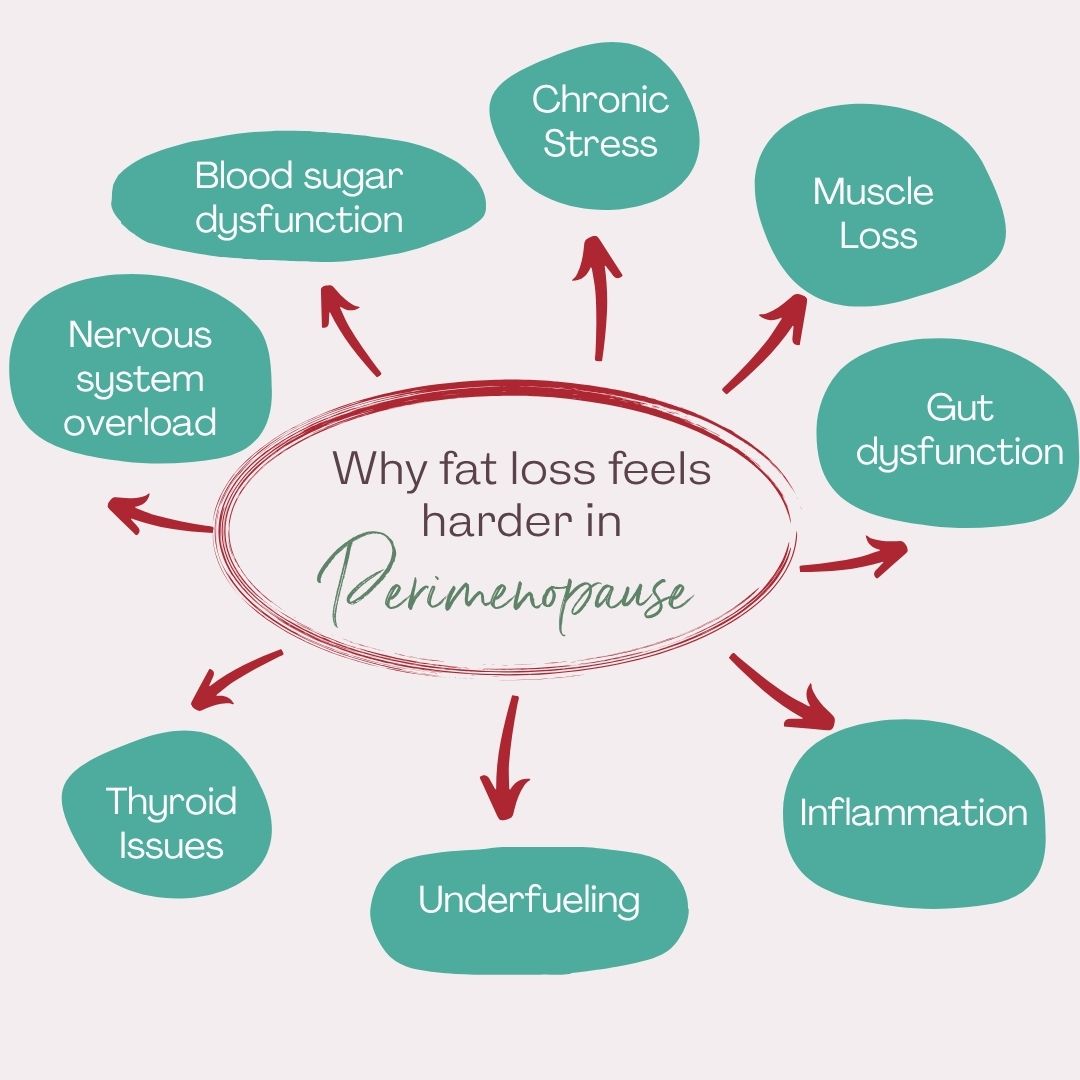
Why Fat Loss Feels Harder In Perimenopause
If you feel like your body has suddenly changed between your late 30’s to mid 50’s, you’re not imagining it.
Many women notice:
• weight gain around the abdomen
• increased hunger or cravings
• feeling “puffier” or more inflamed
• losing muscle tone more easily
• reduced energy and motivation
• feeling like the same things that worked before no longer work
One of the most common things I hear from women is:
“I feel like I’m doing everything right, but the weight just won’t move.”
The hormone recalibration that is perimenopause can absolutely influence body composition and metabolism, but in my experience, it is rarely just about hormones alone.
Often, perimenopause acts more like a magnifying glass. It reveals underlying imbalances that may have been building for years beneath the surface.
Hormonal Changes Are Part Of The Picture
During perimenopause, hormone levels fluctuate significantly.
Oestrogen can swing high and low, progesterone often declines earlier, and these changes can influence:
• appetite
• sleep
• insulin sensitivity
• mood
• fluid retention
• fat distribution
Many women also notice that weight starts to shift more toward the abdominal area during this time.
But hormones are rarely acting in isolation.
Perimenopause Hormones Are Not The Whole Picture
When I work with women struggling with weight changes in midlife, I am also looking at things like:
- blood sugar regulation
- thyroid function
- stress load
- inflammation
- gut health
- muscle mass
- nervous system function
- long-term underfueling patterns
Because all of these can influence how the body stores and uses energy.
Muscle Loss And Metabolic Changes
From our 30s onwards, women naturally begin losing muscle mass unless they actively work to maintain it.
Muscle is incredibly important for:
- metabolic health (a healthy metabolism)
- blood sugar regulation
- strength and mobility
- insulin sensitivity
- energy expenditure
This is one reason why walking alone often stops being enough for many women in midlife.
Resistance training, adequate protein (our needs go up over this time), and proper recovery become increasingly important during perimenopause.
Unfortunately, many women are simultaneously:
- eating too little protein
- chronically dieting and looking at only total calories
- skipping meals
- stressed and sleep deprived
- over-exercising without recovering properly
Can Stress Cause Weight Gain in Perimenopause?
Stress and nervous system overload matter more than most women realise
Many midlife women are carrying enormous stress loads.
They are juggling:
• careers
• parenting
• ageing parents
• relationship stress
• financial pressure
• poor sleep
• emotional burnout
At the same time, they are often trying to “push harder” with dieting and exercise. The body may no longer respond well to this approach.
Chronic stress can influence:
• cortisol levels
• appetite regulation
• cravings
• sleep quality
• inflammation
• blood sugar stability
• recovery capacity
Some women are trying to lose weight while simultaneously running on stress hormones and underfueling themselves.
That does not mean calories do not matter at all. Energy balance still plays a leading role in fat loss.
However, if the body is under significant stress or dysfunction, aggressively cutting calories is often not the best place to start as it can add to the load.
Blood Sugar Dysregulation And Insulin Resistance
Blood sugar instability is incredibly common in perimenopause.
Women may notice:
• intense hunger
• afternoon crashes
• shakiness or irritability when meals are delayed
• strong cravings for sugar or carbohydrates
• difficulty feeling satisfied after meals
• increased abdominal weight gain
Yes all of this can exist even if your GP told you your blood sugar levels are ‘normal’.
This is where I start with most women to avoid setting them up for failure and to ensure their results are long lasting. Download my free balanced meal planner to get started on this.
Why Do I Feel Hungrier In Perimenopause?
Many women also notice their hunger and fullness cues feel different during perimenopause.
This is not imagined.
Hormonal fluctuations during midlife can influence appetite-regulating hormones including ghrelin (the hormone that stimulates hunger), leptin (which helps regulate fullness and energy balance), insulin, GLP-1 and other gut-derived satiety signals.
Some women experience increased cravings and appetite, while others unintentionally under-eat earlier in the day and then feel ravenous later.
Poor sleep, stress, blood sugar dysregulation, chronic dieting and nervous system overload can all further disrupt appetite regulation during this stage of life.
This is one reason why I don’t think the conversation on perimenopause weight gain can be reduced to simple willpower or calorie discussions alone.
The Insulin Resistance Factor
Insulin resistance can also become more pronounced during midlife, especially in women with:
• a history of dieting
• PCOS
• chronic stress
• poor sleep
• low muscle mass
• previous metabolic dysfunction
Balanced meals with adequate protein, fibre, healthy fats, and regular nourishment can make a significant difference here. You can read more about insulin resistance here
Thyroid Function Can Influence Weight Regulation
Thyroid dysfunction is another common piece of the puzzle.
Symptoms may include:
- fatigue
- constipation
- cold intolerance
- hair thinning
- low mood
- brain fog
- difficulty losing weight
Women are often told their thyroid is “normal” despite experiencing symptoms suggestive of reduced thyroid function or poor thyroid conversion. This is why I recommend a more holistic and functional approach to thyroid testing and assessment and not accepting minimums. Read more about low thyroid or hypothyroidism here
Weight Loss And Gut Health In Perimenopause
Digestive health can influence metabolism, inflammation, nutrient absorption, hormones, and appetite regulation.
Women struggling with gut dysfunction may also experience:
• bloating
• bowel irregularities
• food sensitivities
• reflux
• increased inflammation
• fatigue
Inflammation itself can contribute to fluid retention, discomfort, and a body that feels more resistant to change. Is it your gut? Read more here
Are You Underfueled?
This surprises people.
Many women who feel “stuck” with their weight have spent years:
• restricting food
• skipping meals
• over-exercising
• constantly dieting
• fearing carbohydrates
• under-eating protein
Sometimes their body needs:
• nourishment
• blood sugar stability
• muscle support
• improved sleep
• nervous system regulation
• digestive support
…before more aggressive fat loss strategies are even appropriate.
I often find women do better when they stop punishing their body and start supporting it properly.
Not Able To Lose Fat On Legs & Arms - Rule Out Lipoedema
Some of you may have an actual fat disorder. I say this as someone who has a diagnosed fat disorder myself – Lipoedema. Therefor this is an area I am particularly passionate about due to both personal and clinical experience.
For some women, conditions such as lipedema may contribute to disproportionate fat accumulation, inflammation, tenderness, fluid retention, and difficulty losing weight through conventional approaches.
You can read more about lipoedema and my diagnosis story here
The Bottom Line
Weight gain in perimenopause is rarely about laziness or lack of willpower. Please don’t feel like a failure if a generic plan has only worked for a short time or not at all for you.
Your body may be responding to:
• metabolic changes
• chronic stress
• inflammation
• blood sugar dysfunction
• thyroid issues
• underfueling
• poor recovery
• nervous system overload
• hormonal fluctuations
This is why I take an individualised root-cause approach with my clients rather than using one-size-fits-all plans.
If you are struggling with weight changes in perimenopause and feel like your body is no longer responding the way it used to, I can help you get to the root cause and create a plan that will work for you for life, you can learn more about working with me here.